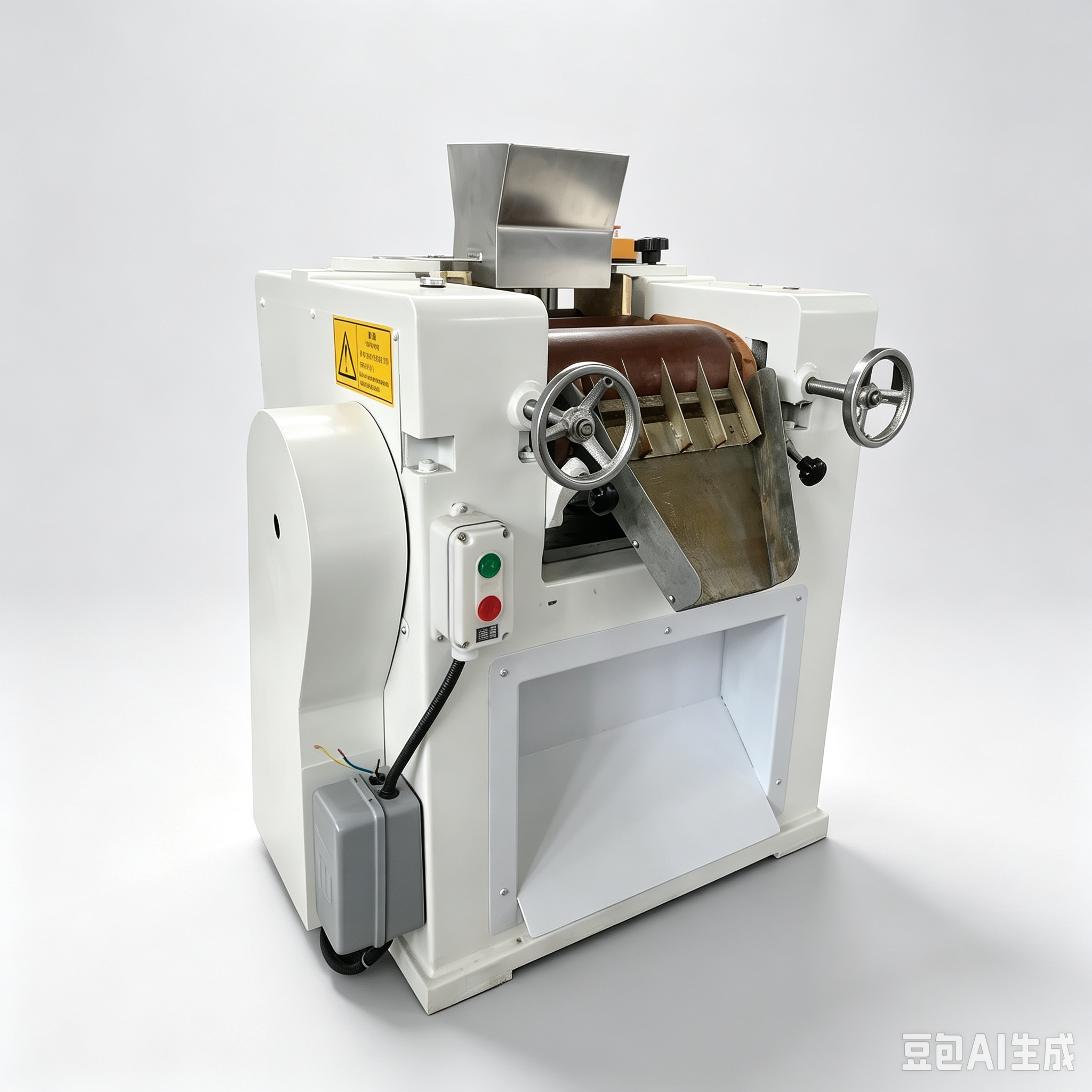
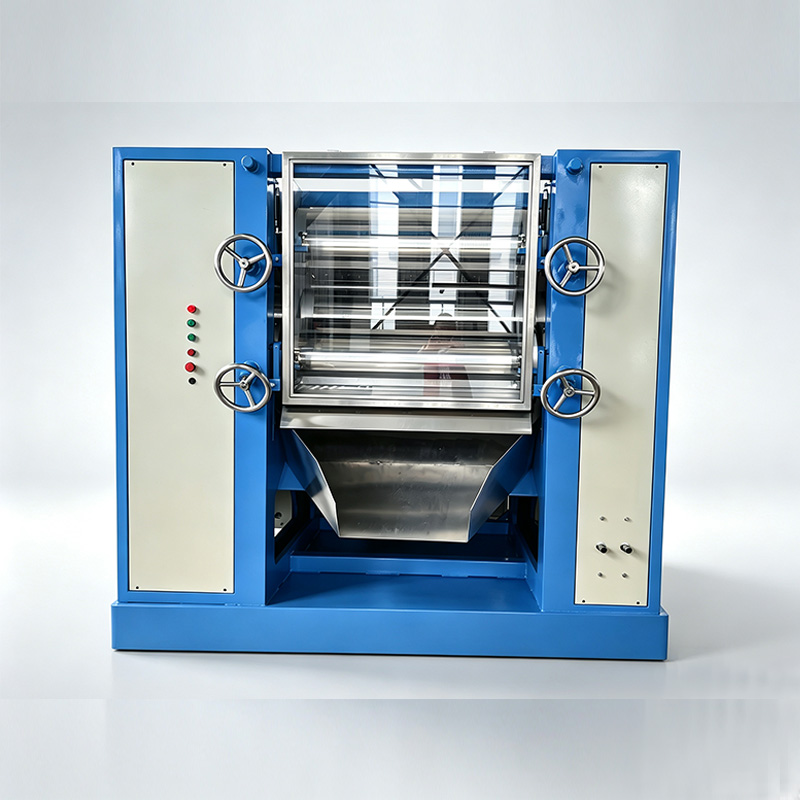
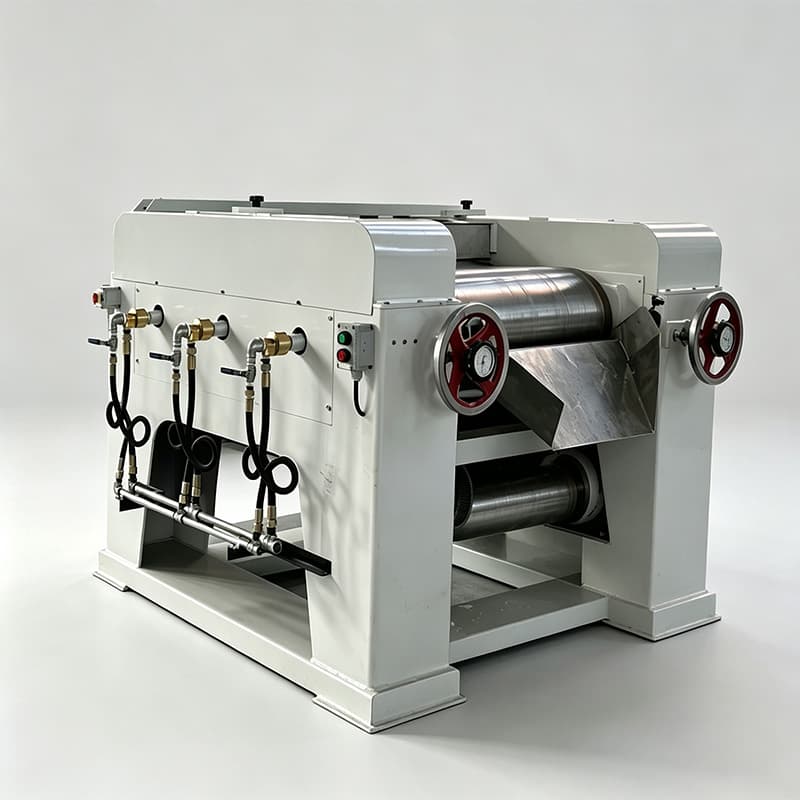
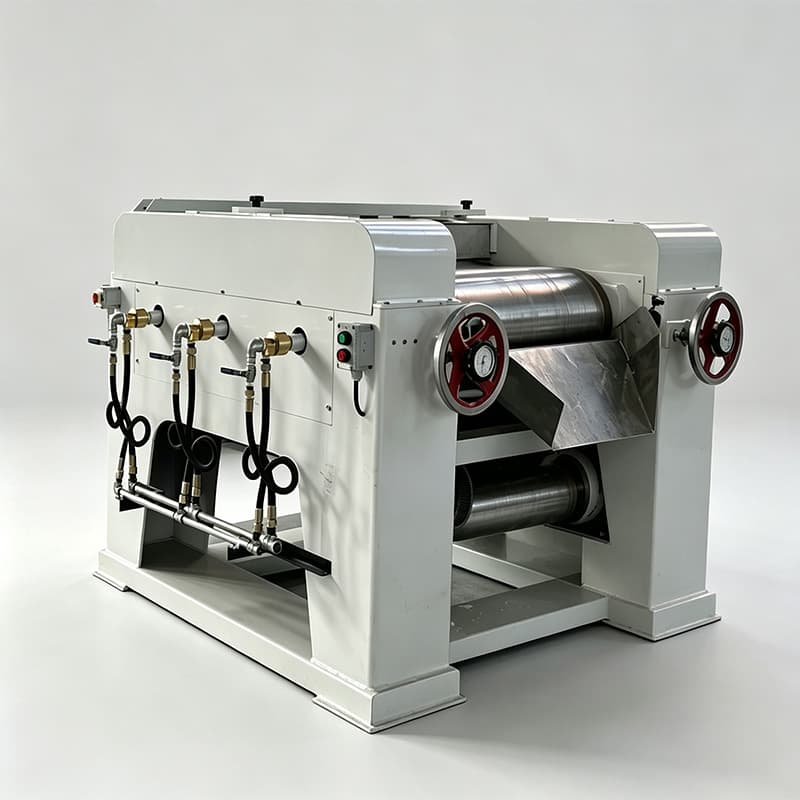
We provide a one-stop service integrating design, production, delivery, installation, staff training and after-sales service for soap making project.
Language
SG Series Roll mills:
A Soap Roll Mill plays a crucial role in the soap refining process by improving the texture and consistency of the soap through mechanical action. The specific function of roll mills is to alter the structure of the soap to increase its quality.
✅ Robust Mechanical Structure
✅ Manual Handwheel Gap Adjustment
✅ Integrated Cooling Water System
Three Roll Mill used to grind and refine the mixed soap materials and increase its density and then improve the end soaps quality
They can break open all kinds of agglomerates creating fineness and quality in each dispersion.
In grinder soap hard particles are eliminated, which enhance the perceived effectiveness, increasing the quantity of foam that can be produced and the solubility, as well as improving the sensation to the touch.
Roll Mills is a fundamental machine for soap refining. Their ability to homogenize soap and particularly to remove grittiness is unbeatable.
Moreover you can obtain excellent soap refining without over-heating it. different from refining plodders.
ZHONGHUI MACHINERY offering two specialized models:
👉 Normally SG series flat three roll mills:
The traditional design widely used for all chemical industry, also very popular in soap production, it can improve soap density. there have 3 modles ,S150, S260 and S405. used for different capacity soap produciton line.
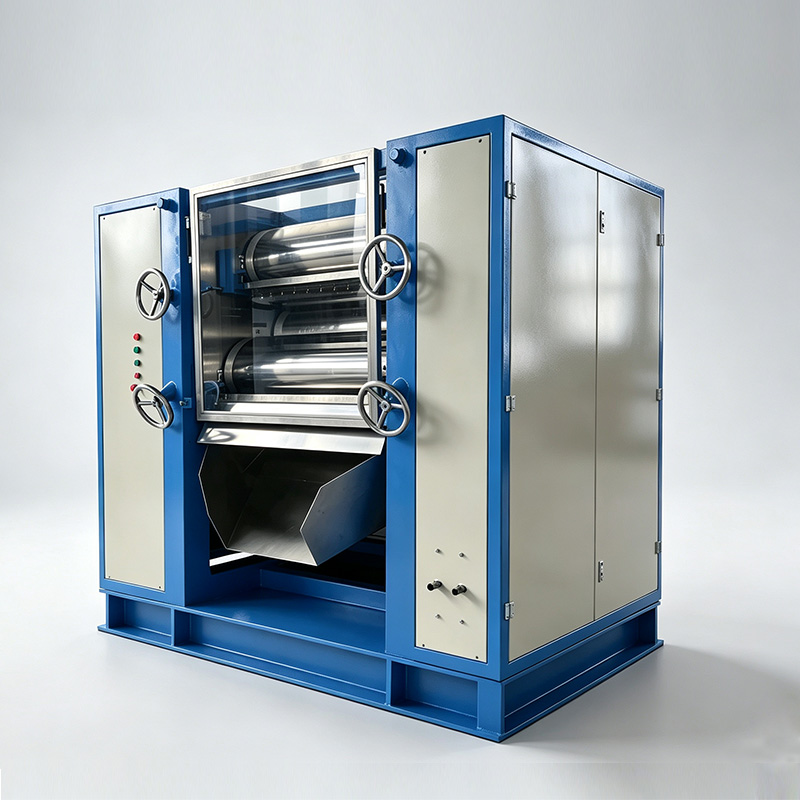
👉 "L" shape vertical three roll mills
Our this type used for more big capacity soap plant, big capacity and more effencity than flat three roll mills.
Three roller grinding machine through three horizontal roller surface extrusion and different speed friction to achieve grinding effect.
A three roll mill or triple roll mill is a machine that uses shear force created by three horizontally positioned rolls rotating in opposite directions and different speeds relative to each other, in order to mix, refine, disperse,or homogenize viscous materials fed into it.
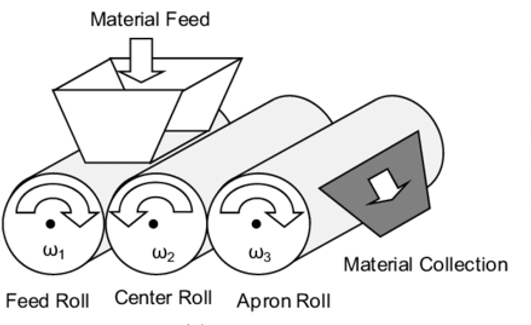
1. The rollers are made from chilled alloy, which has a strong and anti-worn surface, can make the grinding fineness to be 15μm;
2. Water cooling system is equipped, ensures the grinder can have stable performance even working in hot environment 24 hours nonstop;
3. Transmission is by delicate gear, which ensures low noise, stable performance and long lifespan.
4. Classic three roll mill equipped with ergonomically designed handwheels, allowing experienced operators to manually control the roller gaps with tactile precision.
5.Manufactured with chilled cast iron or optional alloys to ensure high wear resistance and excellent thermal conductivity during the milling process, the classic three roll mill is built to deliver reliable, consistent performance.
6.Built-in internal water cooling channels inside the rollers prevent overheating, protecting sensitive materials from thermal degradation.
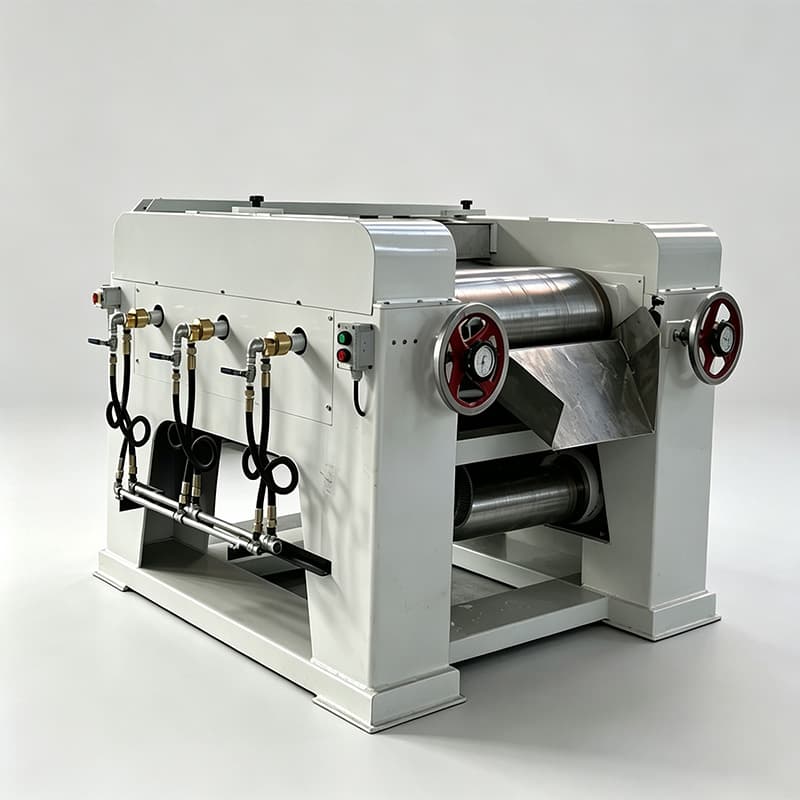
Working process:
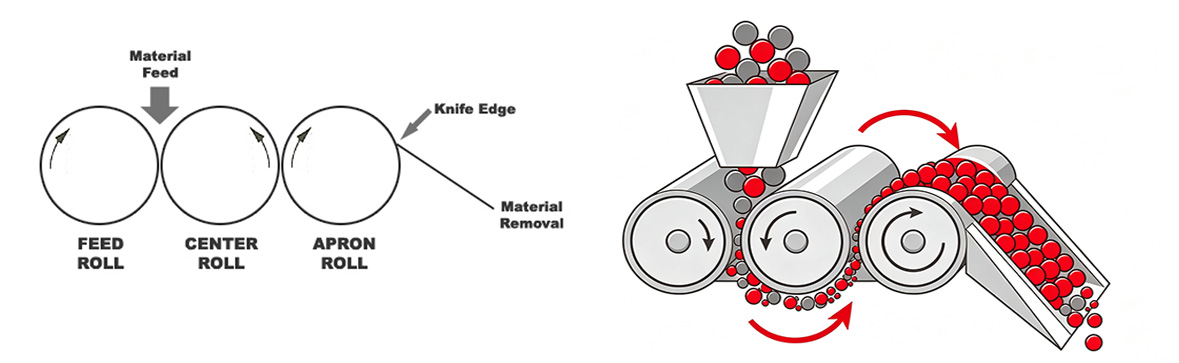
The three adjacent rolls of a three roll mill (called the feed roll, centre roll and apron roll) rotate at progressively higher speeds. Material, usually in the form of paste, is fed between the feed roll and the center roll. Due to the narrowing space between the rolls, most of the paste initially remains in the feed region. The part that makes it through the first in-running nip experiences very high shear force due to the different rotation speeds of the two rolls. Upon exiting, the material that remains on the center roll moves through the second nip between the center roll and apron roll. This subjects it to an even higher shear force, due to the higher speed of the apron roll and typically, a smaller gap than between the feed and centre rolls. A knife blade then scrapes the processed material off the apron roll and the paste rolls down the apron. This milling cycle can be repeated several times to maximize dispersion.
The gaps between the rolls can be mechanically or hydraulically adjusted and maintained. Typically, the gap distance is far greater than the particle size. In some operations, the gap distance is gradually decreased to achieve the desired level of dispersion. The rollers are normally internally water-cooled.
| Model | Roll Diameter | Roll Length | Power | Rate | Dimesion | Weight |
| S-150 | 150 mm | 300 mm | 4 kw | 1:3:9 | 810*870*1100mm | 350 kg |
| S-260 | 260 mm | 675 mm | 11 kw | 1:3:9 | 1690*1100*1040mm | 1780kg |
| S-405 | 405 mm | 810 mm | 22 kw | 1:3:9 | 2000*2000*1300mm | 4120kg |
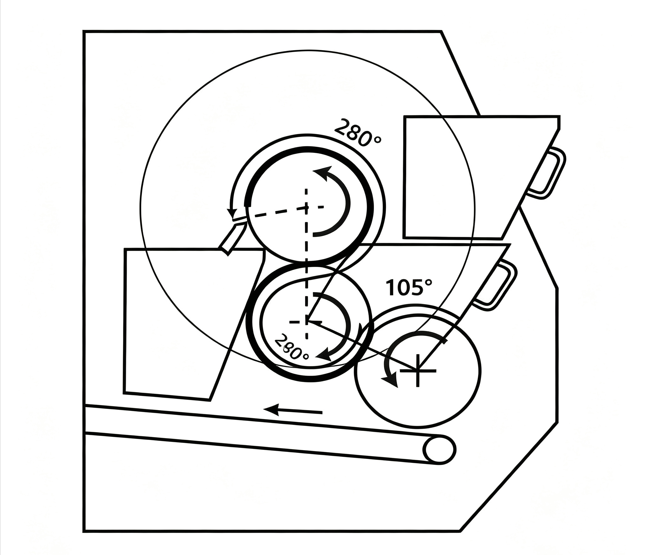
Grinding and dispersion are achieved by exerting powerful compressive and shear forces on the material using three counter-rotating rollers operating at different speeds.
The material must pass sequentially through two gaps—or "grinding zones"—formed by the rear and middle rollers and the middle and front rollers, respectively, undergoing two stages of grinding. The process is detailed below:
Feeding and Initial Grinding: A paste of a certain viscosity is fed into the space between the rear roller (slow roller) and the middle roller. As the two rollers rotate in opposite directions at different speeds, the material is drawn into the gap, subjected to intense compression and shear forces, and begins to undergo grinding and dispersion.
Transfer and Secondary Grinding: Because the middle roller rotates faster than the rear roller, the ground material adheres to the surface of the middle roller and is carried into the gap between the middle roller and the front roller (fast roller). Here, the material undergoes even more intense shear and compression, resulting in further refinement and dispersion.
Discharge and Collection: The front roller rotates at the highest speed, and the fully ground material adheres to its surface. A discharge scraper positioned against the front roller removes the material, which then falls into a collection vessel, completing the entire grinding process.
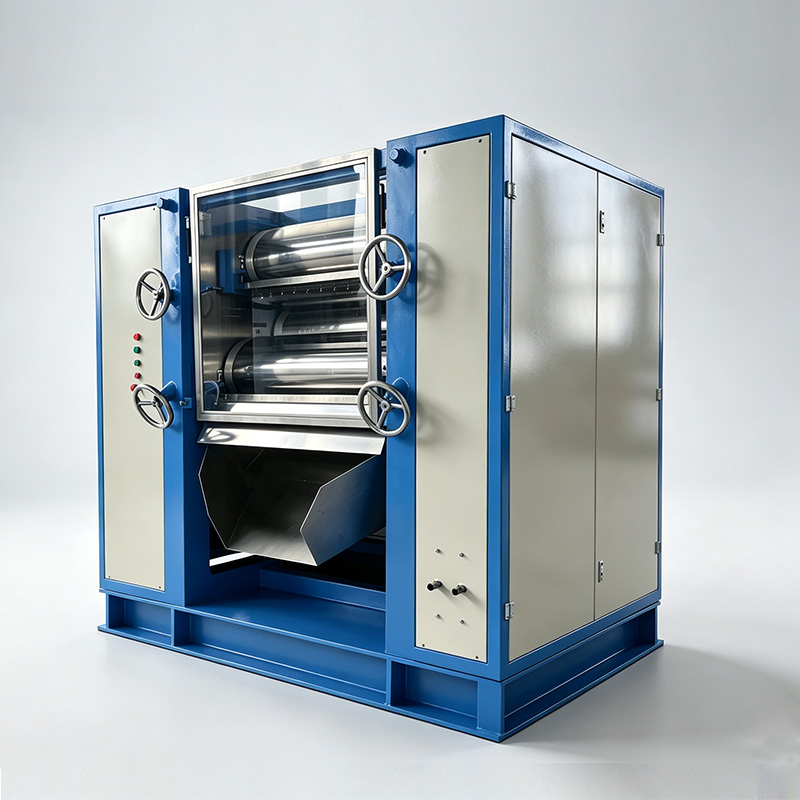
High grinding fineness: By adjusting the gap between the rollers, the machine can grind materials to a very fine particle size—typically ranging from 3 to 18 microns (μm)—thereby meeting the stringent fineness requirements of industries such as paints, inks, and electronic materials.
Ideally suited for high-viscosity materials: The three-roll mill is a classic, highly efficient dispersion tool for high-viscosity pastes—such as inks, pigments, and cosmetic creams—that other types of equipment may struggle to process.
High output and significantly improved efficiency: In specific applications, it can replace traditional ball mills, reducing grinding times from days to mere minutes and dramatically boosting production efficiency.
Precise temperature control: Many advanced three-roll mills allow for independent cooling or heating of each roller, achieving temperature control precision of ±1°C. This is crucial for processing temperature-sensitive materials, as it prevents degradation caused by overheating.
Easy to clean with minimal material residue: Since the components in direct contact with the material are primarily the three rollers, the structure is relatively simple, making cleaning very convenient. Additionally, minimal material remains on the roller surfaces, maximizing yield and minimizing the waste of valuable materials.